One operation. Every requirement in view.
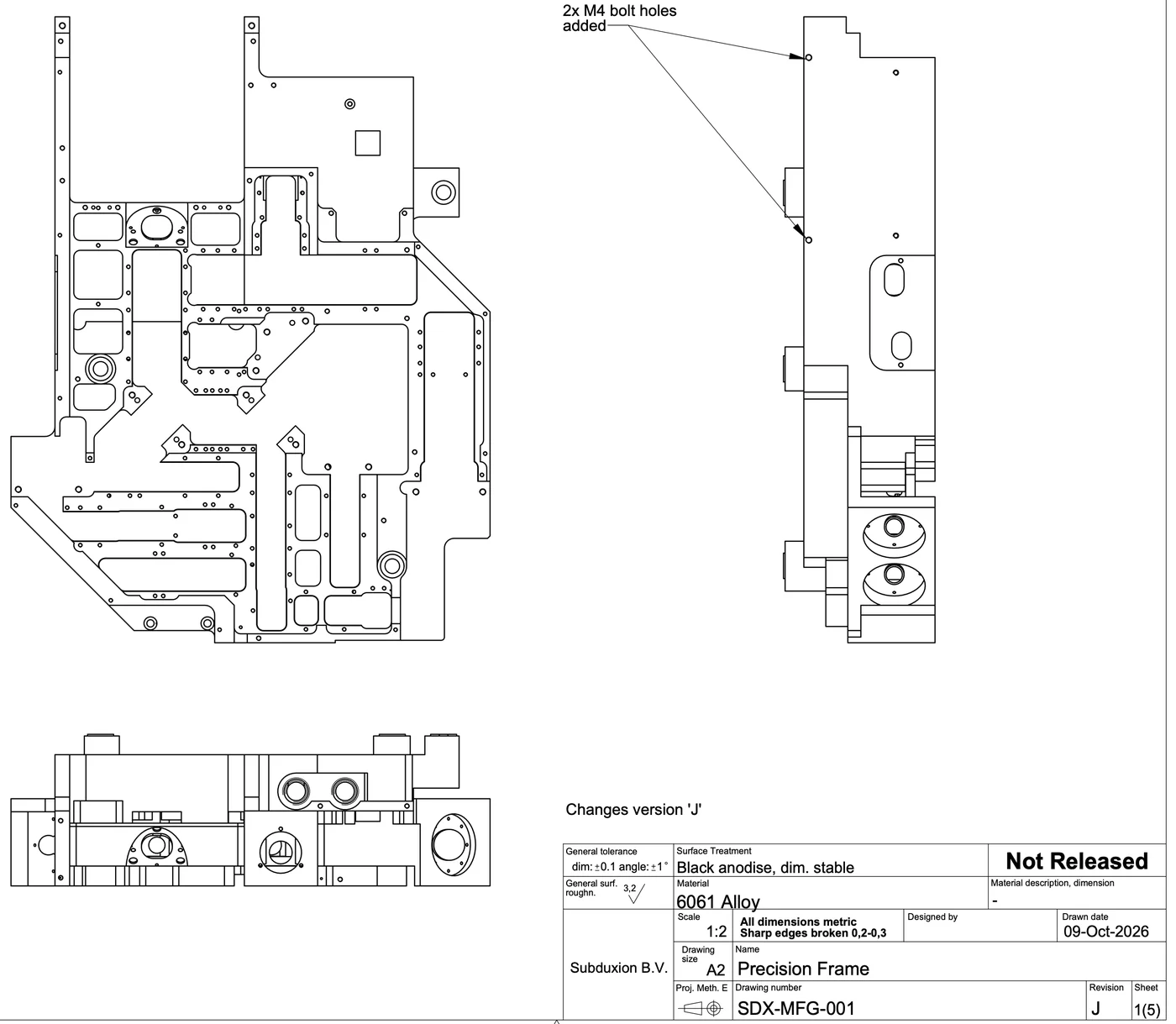
Roughness, tolerances and material from the drawing, next to your own wire EDM machines.
From drawing to roughness, size and material.
- SDX-EDM-012_Rev-B.pdf
- SDX-EDM-012_Rev-B.step
Read from the drawingTo check
- Material
- 1.2379
- Hardness
- 60–62 HRC, supplied hardened
- Contour tolerance
- ±0.005 mm
- Contour roughness
- Ra 0.4
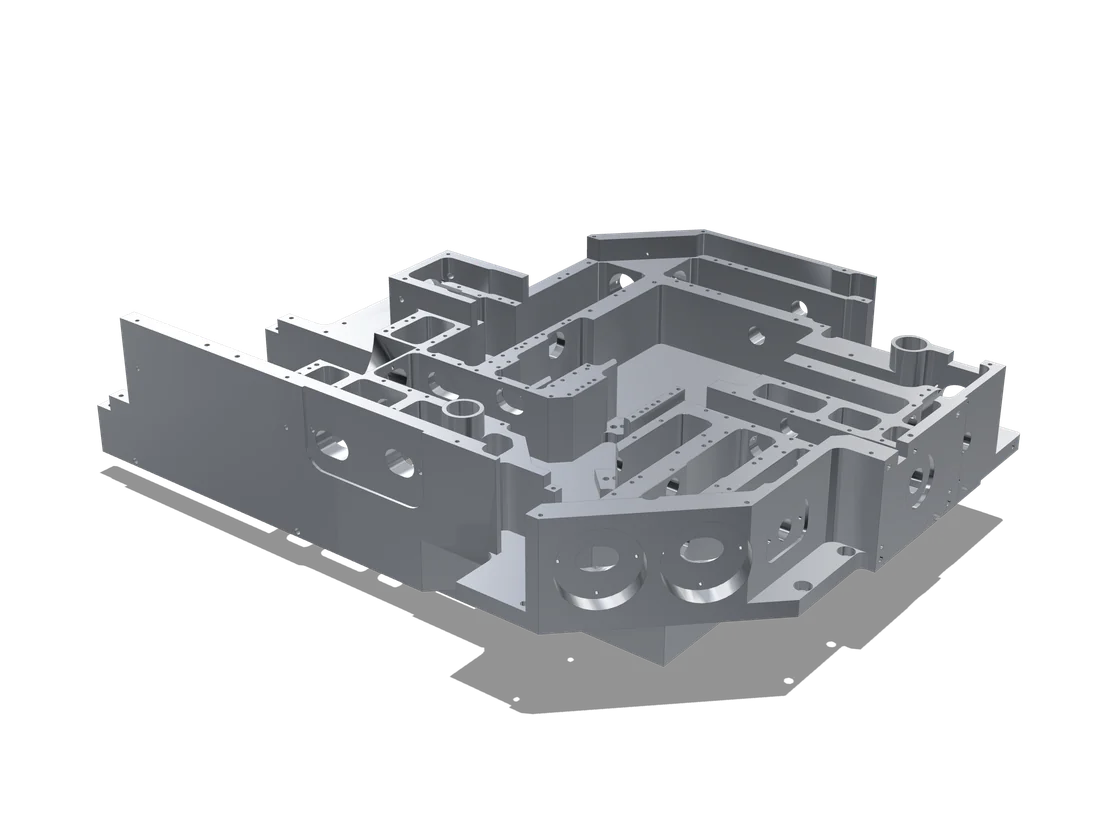
STEP and PDF per part, with roughness, tolerances and material as proposals beside the model.
Paired per part
Model and drawing matched by file name. If a match is uncertain, you make the call.
Roughness and tolerances
Read from the drawing, beside the model. You confirm or change them.
Revisions kept
Every revision stays with the part, with its own files.
- Part
- 160 × 110 × 32 mm
- Envelope
- 550 × 350 × 400 mm
- Axes and reach
- X, Y and Z, with U and V for taper cutting
ManufacturabilityUnder review±0.005 mm and Ra 0.4 in the contour, to confirm
Hourly rateYour rate for this machine
- 1Flaton the table, aligned to the reference edge
- Wiretype and diameter set by your specialist
- Start holes Ø1.5one per inner contour
Your wire EDM machines with envelope and your own hourly rate, next to your milling and turning machines.
Envelope recorded
Per machine, the envelope the part has to fit in.
Your own rate
Every machine at your own shop’s rate.
All your machines
Every machine in one place, for the whole team.
What sets wire EDM time.
Cut length and height.
Together they make up the area the wire cuts through. Add the material, and you have the cutting time.
Skim cuts for size and finish.
A lower Ra takes more skim cuts, and every skim runs the whole contour again.
Aligning a supplied part.
A half-finished part has to be located and aligned first, and it already carries a lot of value.
One model under estimating and the shop floor.
Underneath Blake sits Subduxion’s manufacturing world model: how a part, its requirements, your machines and your team’s decisions fit together. The next steps build on it.
- Tools, holders and fixtures go into the same model.
- Next: every setup checked before the machine runs.
- Engineering, estimating and production then work from one model.
Frequently asked questions
Which files can I use for a request?
STEP models and PDF drawings. You upload them in one go, and Blake pairs model and drawing per part.
Does Blake take roughness and tolerances from the drawing?
Yes, as proposals beside the model: roughness, tolerances and material. You confirm what is right and change what is not.
Can we record our wire EDM machines?
Yes. You record them with their envelope and your own hourly rate, next to your milling and turning machines. Next: cutting time calculated from contour, height, material and skim cuts.
One request worked through requirement by requirement.
In the demo we show how a request with drawing and model comes into Blake, then talk about your operations.
SDX-MFG-001 Rev J