Made parts, bought parts and assembly. One cost.
Every part counts once, whether you make it, buy it or send it out.
A module built up part by part.
- SDX-ASM-004_Rev-C.pdf
- SDX-ASM-004_Rev-C.step
Requirements on the drawingTo check
- Material
- EN AW-6061 T6
- Finishing
- Clear anodising
- General tolerance
- ISO 13920-BF
- Welds
- TIG, ISO 10042-B
Every part of a module with model, drawing, quantity and revision, in one request.
One line per part
Made parts and bought parts side by side in the same request.
Revisions kept
When the customer changes one part, the previous revision is kept.
Requirements as proposals
Material, tolerance and finishing: confirm them or change them.
What does this part cost in your shop?
See how Blake calculates with your machines, rates and production setup.
Request a demo- Interface node, milled8×
What does this part cost in your shop?
See how Blake calculates with your machines, rates and production setup.
Request a demo - Instrument plate, milled1×
What does this part cost in your shop?
See how Blake calculates with your machines, rates and production setup.
Request a demo
Build-up: X-ray inspection of the weldsOutsourced, no price entered. An open price never counts as zero.
Made parts with their own estimate, bought parts and outsourced steps as their own lines, and your assembly work with hours and rate.
Every part once
The roll-up counts every part exactly once.
Outsourced work included
Anodising as its own line, at your supplier’s rate.
Assembly on its own line
Your assembly hours and rate in the same cost.
- ECBExchange ratesEvery working day
- EurostatProducer pricesMonthly
- World BankAluminium, LMEUSD 3,283/tSep 2026
Your material catalogueYour own names and prices
Reference updatedAluminium, Sep 2026. The estimate still uses your own purchase price.
Your own material names and purchase prices in one place, for every made part.
Your purchase prices
Per material, with unit and date.
Names you recognise
One catalogue with the material names your shop uses.
References apart
ECB, Eurostat and World Bank as a trend, with source and date. Never a purchase price.
What decides the price of a module.
Make or buy.
Decided again for every part and every order: your own capacity, the lead time and the supplier’s price.
Assembly and test.
Hours that only exist once the parts come together, and that you know better than anyone.
Handling and mark-up.
Bought parts take handling and stock, and often a mark-up on what you pass through.
One model under estimating and the shop floor.
Underneath Blake sits Subduxion’s manufacturing world model: how a part, its requirements, your machines and your team’s decisions fit together. The next steps build on it.
- Tools, holders and fixtures go into the same model.
- Next: every setup checked before the machine runs.
- Engineering, estimating and production then work from one model.
Frequently asked questions
Can I combine own work, bought parts and outsourced work in one cost without counting anything twice?
Yes. Made parts keep their own estimate, bought parts and outsourced steps are lines of their own, and your assembly work is a line with hours and rate. The roll-up counts every part once.
Can I import a bill of materials?
You put the parts of the module in one request, each with model and drawing. Bought parts are priced from your own library or stay open until you fill them in. Next: importing a BOM directly.
Every part of the module in one cost.
In the demo we show how made parts, bought parts and your own work come together into one cost in Blake.
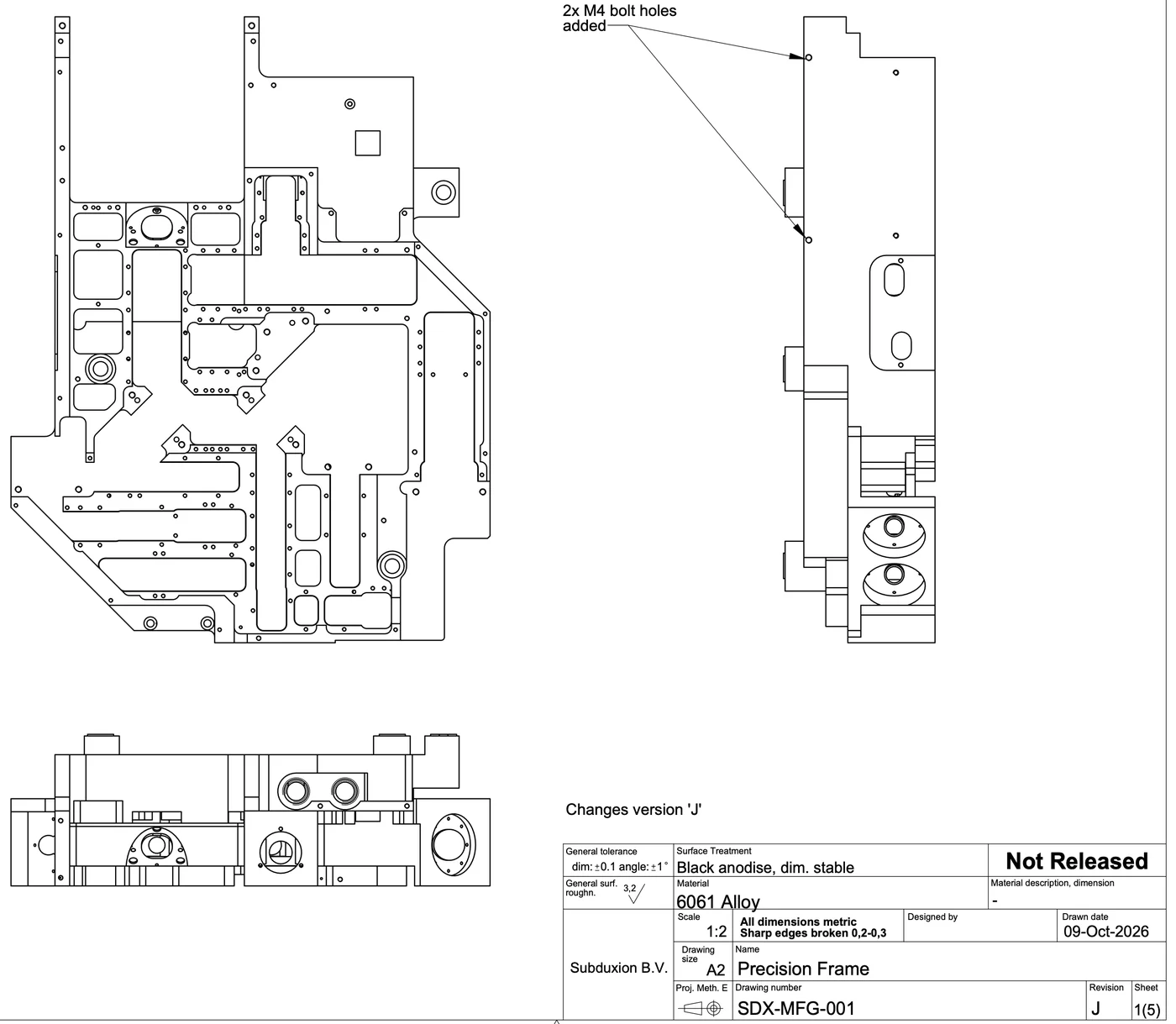
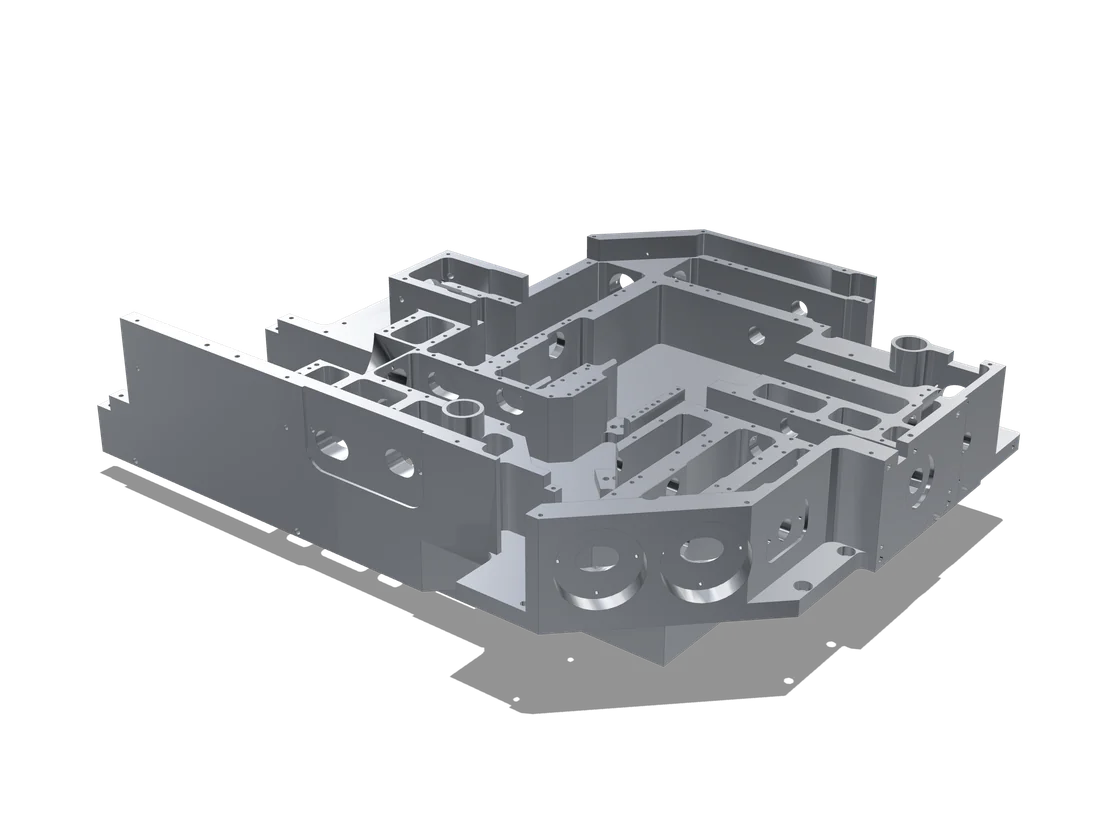
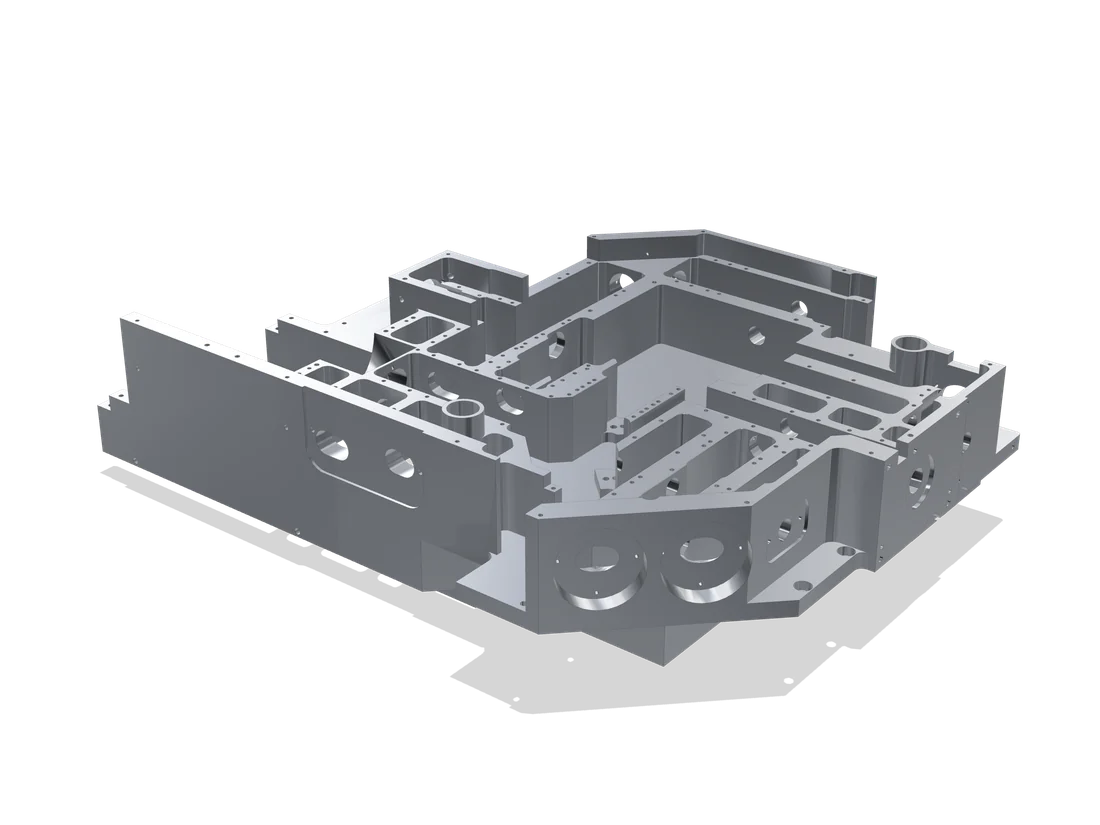
SDX-MFG-001 Rev J